Kuules
Paint
paint a texture where it should be
paint a texture where it should be
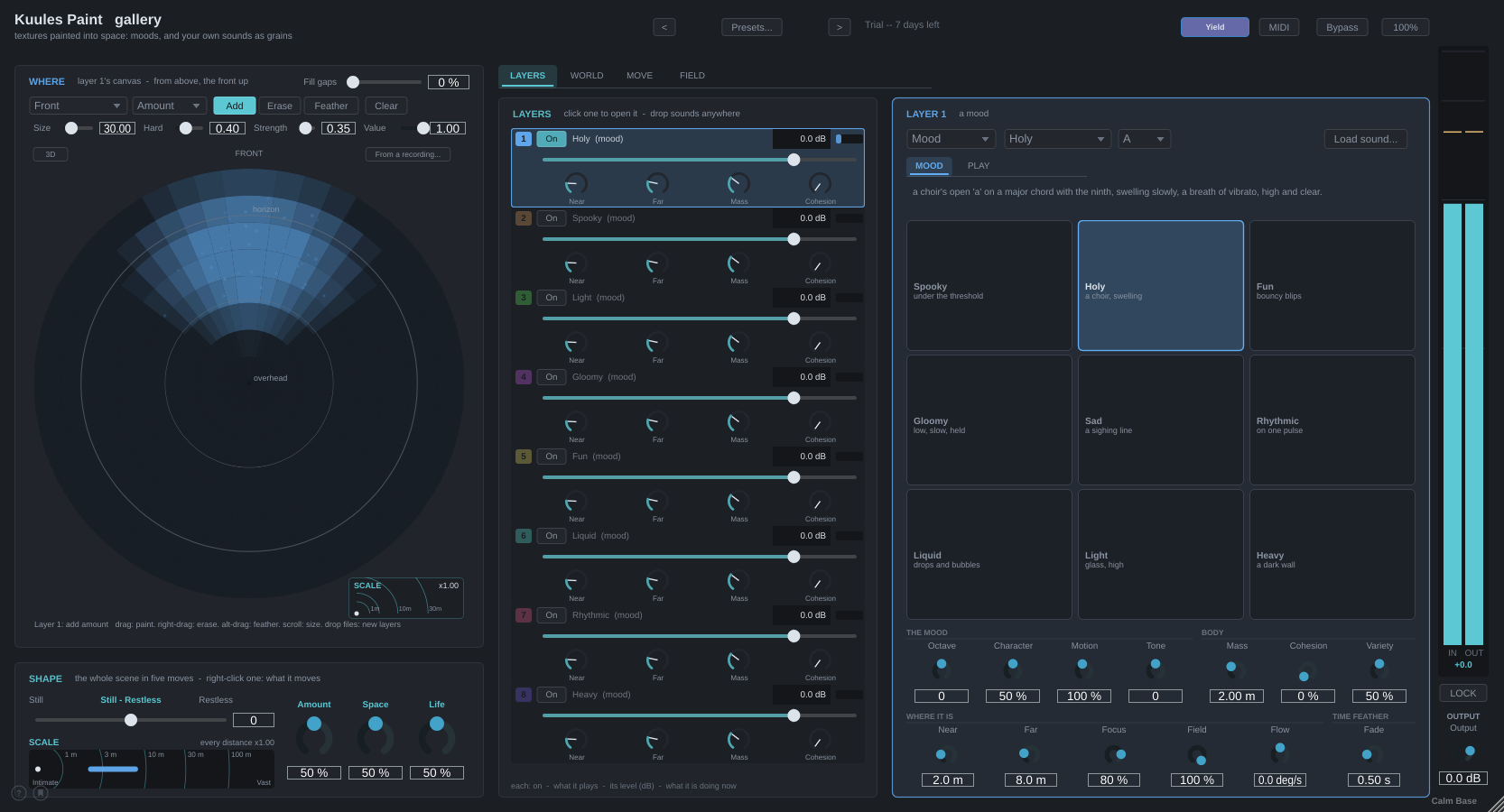
Your own sounds, or a mood, painted into the space around the listener. Paint is a granular instrument that works in three dimensions: up to eight layers, each painted where it should be and how much.
Kuules Paint works in space. Each layer is a canvas around the listener: where you paint, the grains gather, and where the paint is thick they play more. A second channel paints their tone, a third their pitch.
Your sounds, or a mood. Drop files on the window and each becomes a layer — a stereo file keeps its sides, an ambisonic one its place. Or start from one of nine moods, from spooky and holy to liquid, light and heavy, in a key.
The scene moves the grains. Grains can travel from where they are heard, be blown by the wind, be drawn toward or pushed away from the other sounds in the session, or fill the gaps where nothing else is playing.
Each with its own canvas and its own source: a mood, or your sample.
Turn a recording's own map of where its sound is into paint, with one undo.
New grains are born away from where the track already sounds.
What you paint eases in over each layer's own fade.
121 channels in CLAP, up to 7th order in VST3, ambiX (ACN/SN3D) throughout.
A ring round every knob: drag it and the knob moves — by an LFO, a wandering drift, a follower of the track or an envelope. The knob stays where you set it; the ring shows the movement round it.
Move any control from your own controller; one knob can drive several, each with its own range.
Fixed cases rendered and compared on every build, so a change that should be silent is proven silent.