Kuules suite
Verb
a room, not a wash
a room, not a wash
Verb builds a room, not a wash.
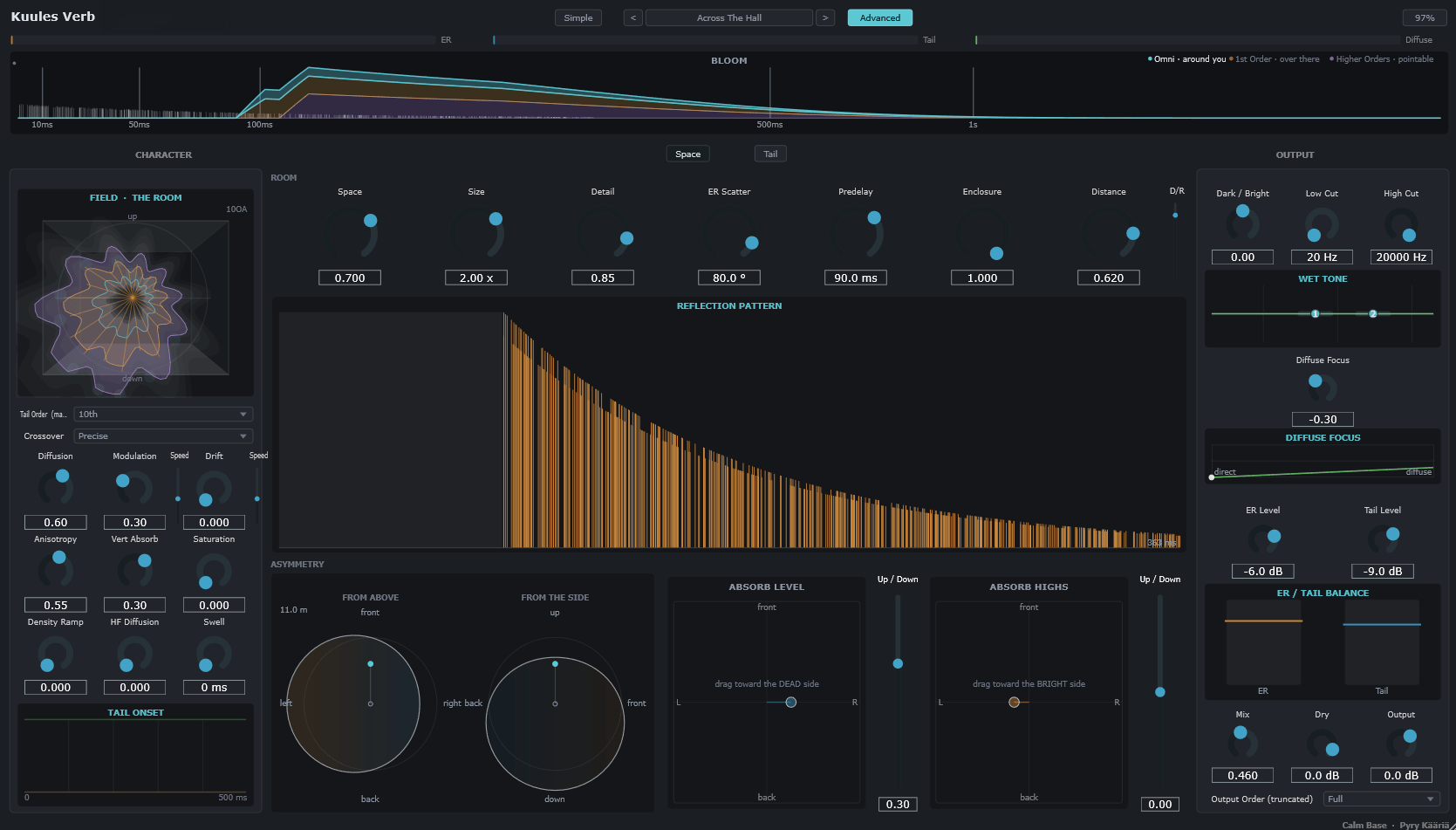
Most reverbs make a cloud of decaying sound and place it around you. Verb keeps two things apart: the early reflections — the first few dozen distinct bounces off walls, floor and ceiling, arriving from particular directions — and the tail that follows. The early part tells your ear how big the space is and what it's made of; the tail tells it how long sound stays there. Blurred together you get an impression of a room. Kept apart you can build one.
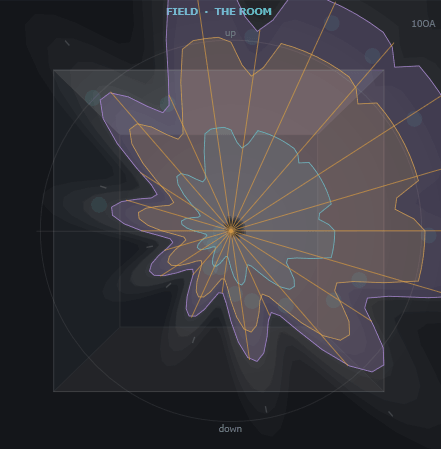
Both stay directional. Reflections come from where the surfaces are, and the tail carries the room's asymmetry with it — a space longer than it is wide decays that way, and you can hear which way you're facing in it. Most reverbs give a tail that is identical in every direction, which is the sound of no room in particular.
Sources have distance in it too, so one can sit close and another far in the same space, with the room answering each differently.
And a room needn't be a room. Take the walls far enough out and what's left is weather, distance and air — the outdoors is a room whose surfaces are a long way off, or not there at all.
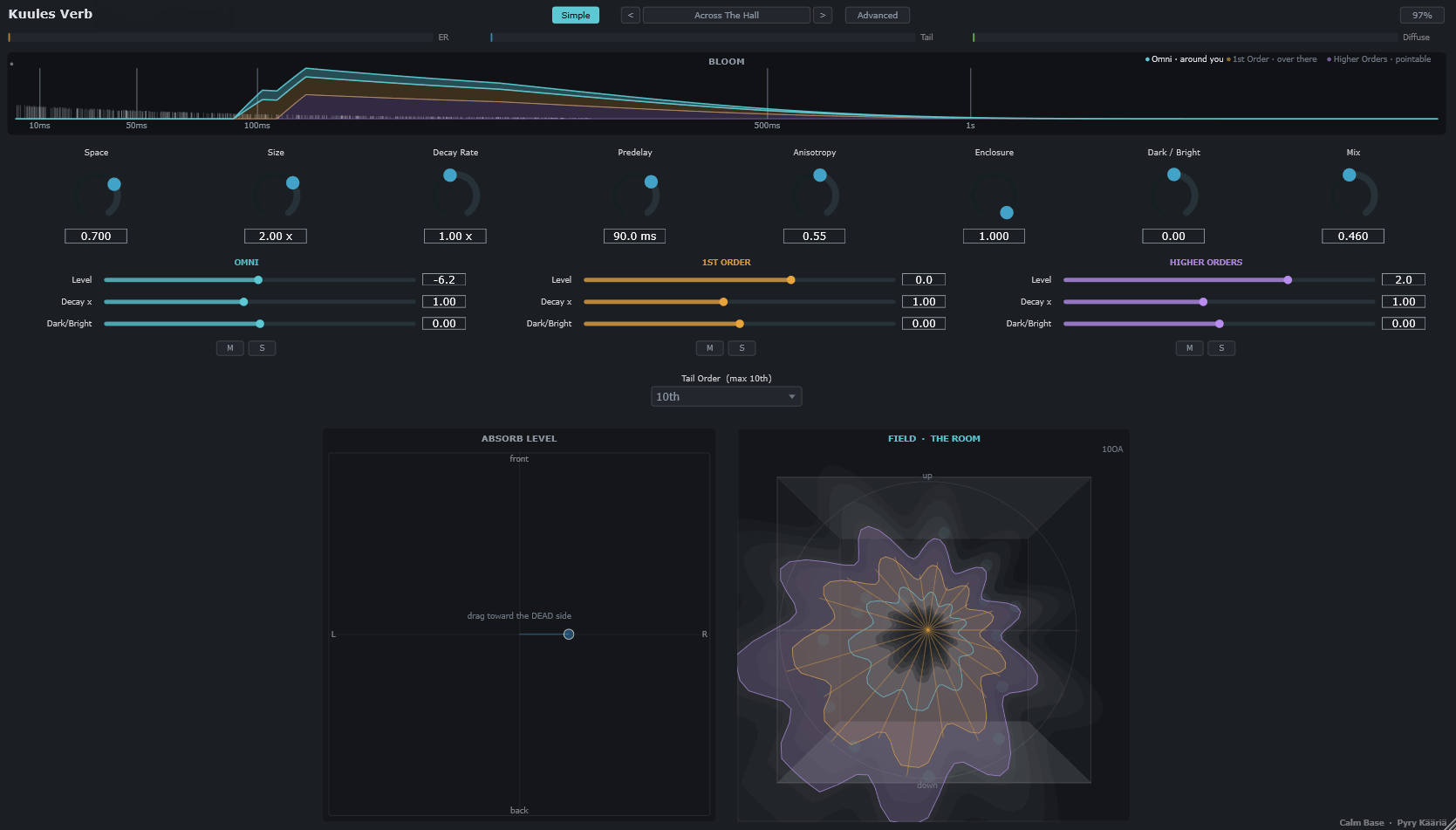
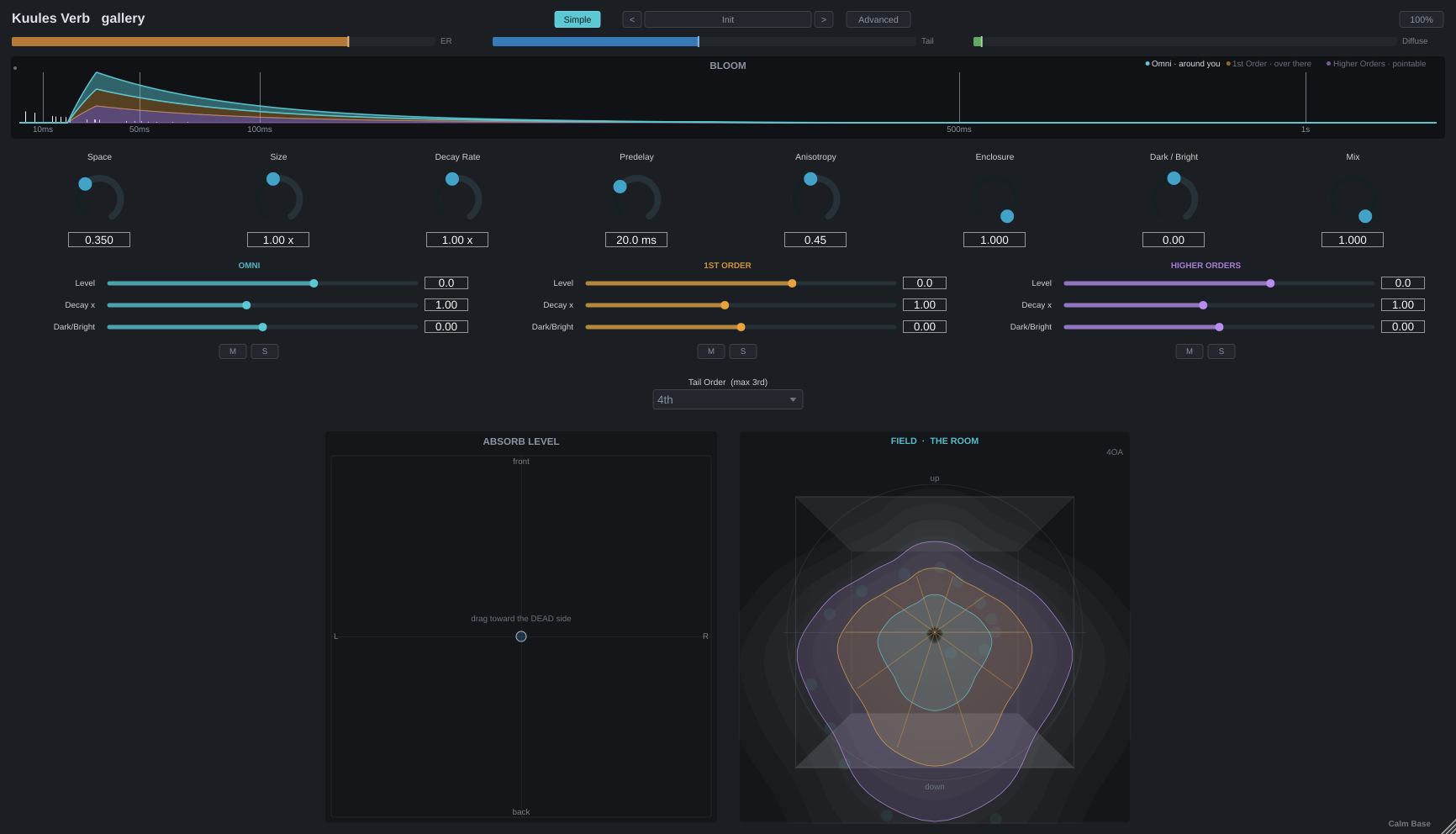
Shape the omni bed and the higher orders separately.
The whole tail drawn, per tier, as you work.
What the space is doing, in the space's own terms.
Listened to one at a time, not generated.